Britain’s 14 Overseas Territories (BOTs) are the remaining loose ends of its empire. They were collectively defined in the British Overseas Territories Act of 2002, which was passed five years after Hong Kong reverted to China, thereby reducing the total population of the formerly-called Dependent Territories from about 7 million to about 0.25 million. The 2002 Act’s prime purpose was to determine the nationality and citizenship issues that apply to the Territories.
The Overseas Territories (with their capitals) are listed below in the approximate order of their first coming under British control. Each is largely self-governing in its internal affairs, with its own democratically elected government, parliament, and local constitution, but the UK government retains full responsibility for their defense, foreign affairs, and internal security. Each has, in effect, a Government House in its capital, and carries the responsibility to provide a suitable residence for its London-appointed Governor. The buildings in which the Governors live therefore stand apart from the diplomatic buildings with which this website is otherwise concerned, but appear here because they constitute a unique set of buildings.
…
Bermuda: Hamilton
Bermuda is a group of about 130 small islands, of which about 20 are inhabited. It was colonised in 1609 by the Virginia Company, an English trading company chartered by King James I with the objective of colonising the eastern coast of America. The present Government House, on Langton Hill overlooking the North Shore in Hamilton, was designed by architect William Cardy Hallet and built in 1892 with stone imported from France.
…
Saint Helena, Ascension and Tristan da Cunha
First granted by charter to the East India Company in 1657, and in 1834 annexed to the British Crown. This Territory comprises three isolated island groups in the South Atlantic: Ascension Island is furthest north, 2,000 miles from furthest south Tristan da Cunha, with St Helena (where Napoleon spent his final years)in-between. Each has its own capital: Jamestown on Saint Helena; Georgetown on Ascension Island; and Edinburgh of the Seven Seas on Tristan da Cunha. Plantation House is the official residence of the Governor of St Helena (and the overall Governor of the Territory). It is about two miles south of Jamestown, in the district of St Paul’s, and was built in 1792 by the East India Company. In Georgetown, there is a Government House serving Ascension Island, where an Administrator lives and works, and where the Governor stays when on this island. In Edinburgh of the Seven Seas, there is a small government office facility, nicknamed ‘Whitehall’.
…
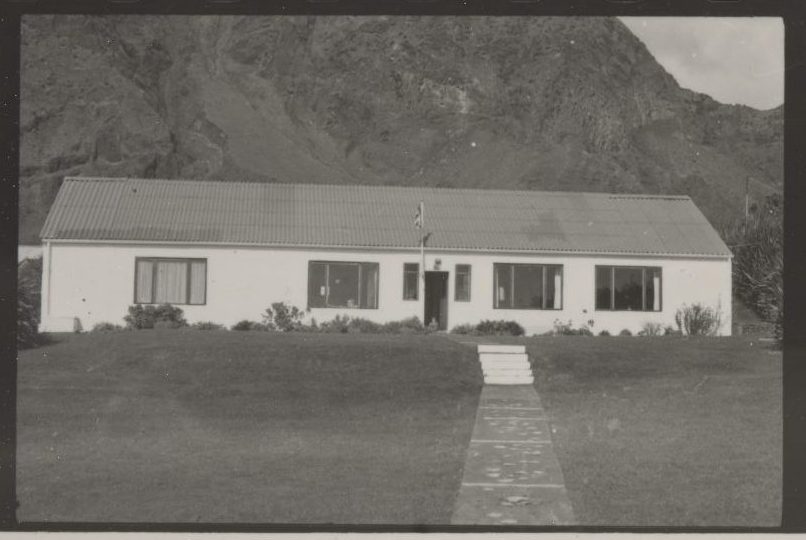
Tristan da Cunha, Government ofices, ?1950s.
…
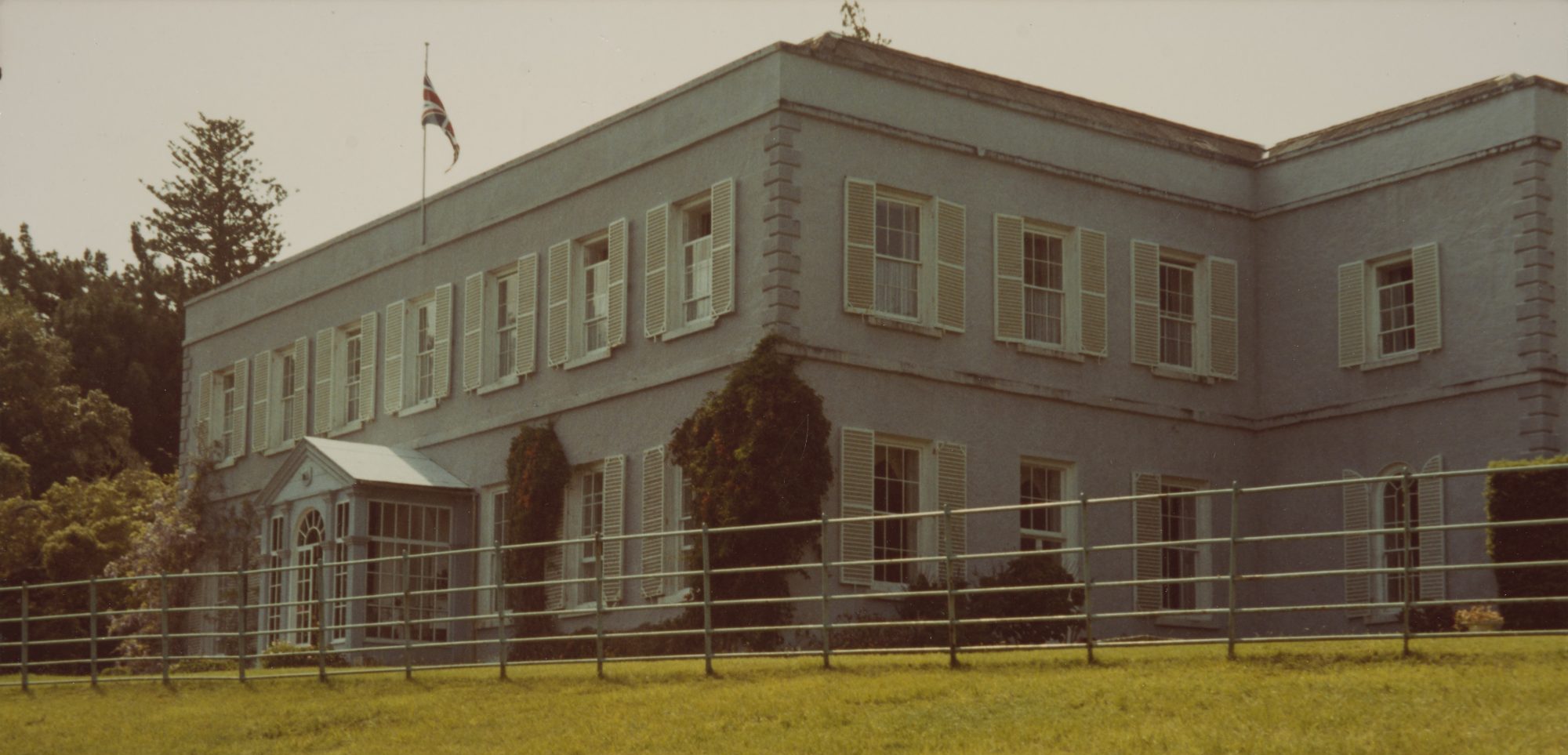
St Helena, Jamestown, Government House, ?1990.
…
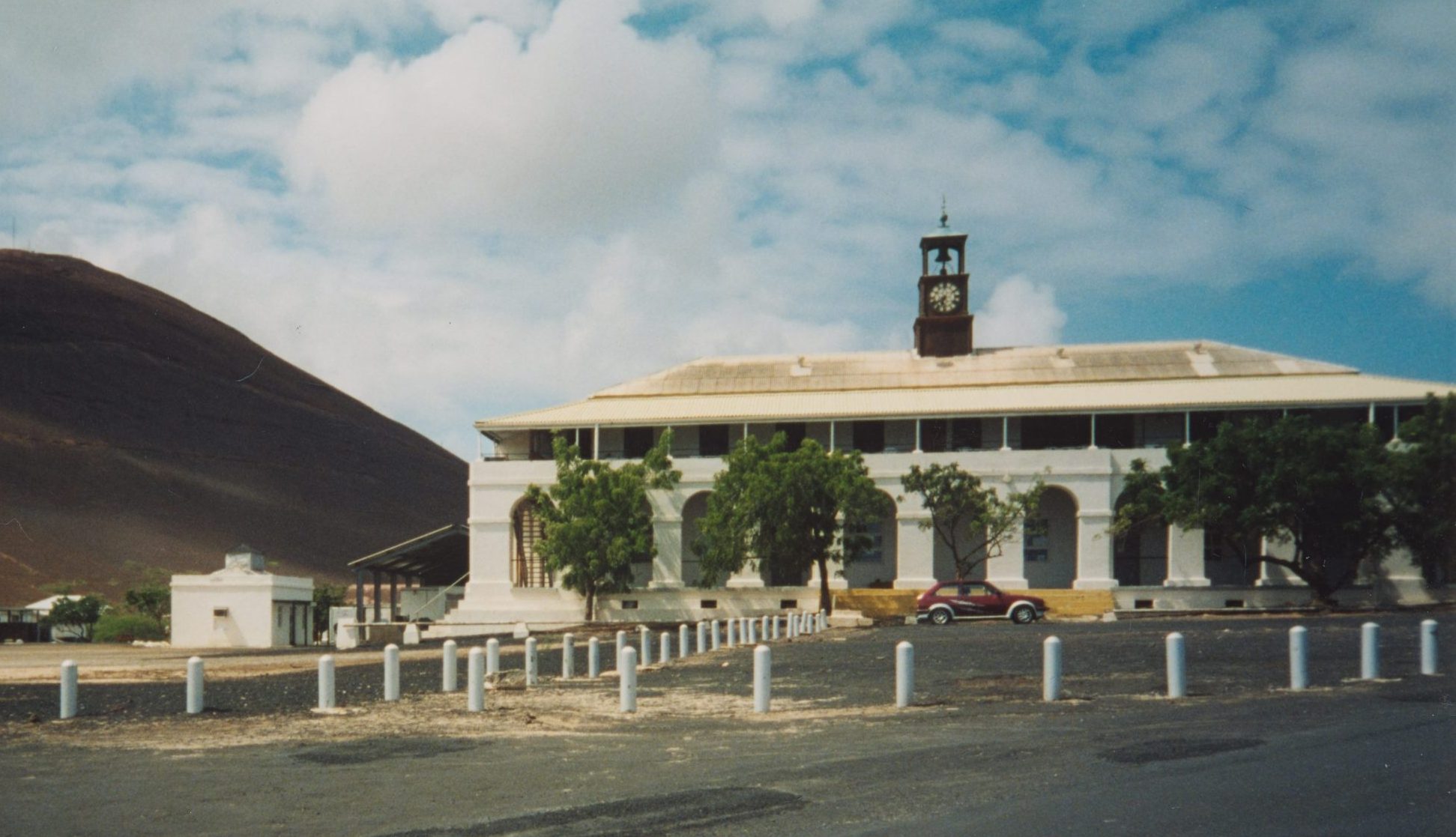
Ascension Island, former Government office, 2002.
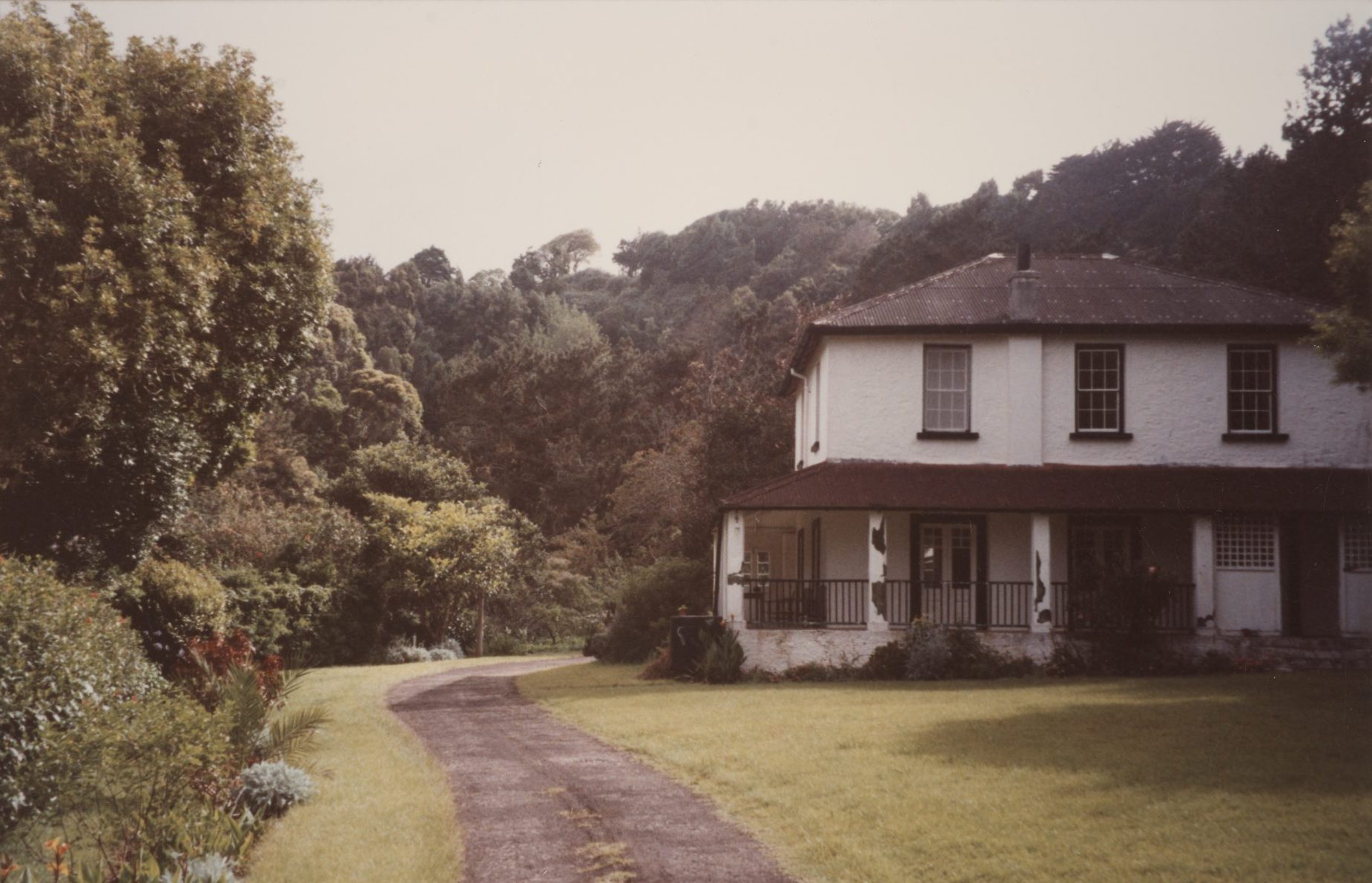
St Helena,[what is this?]
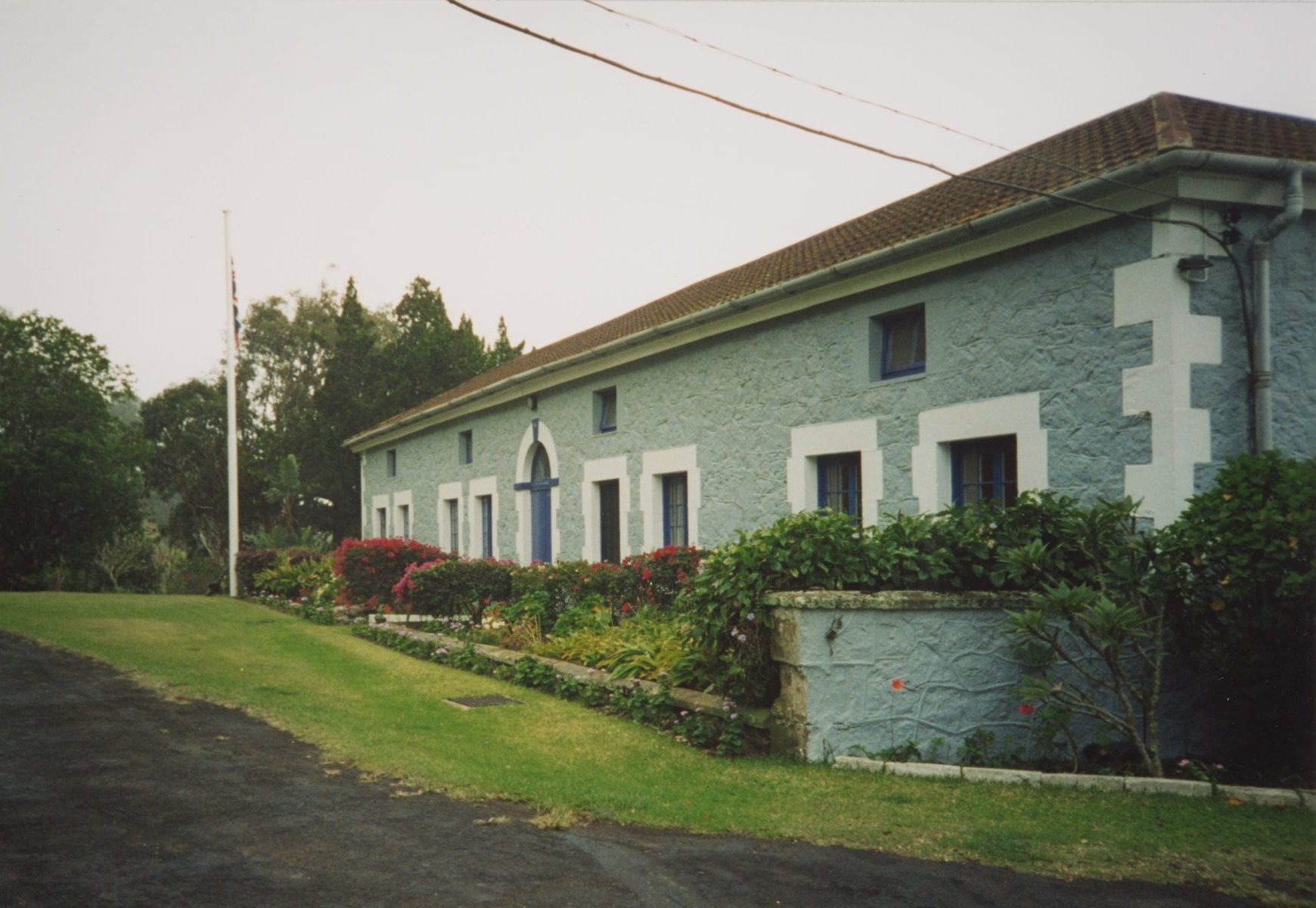
Ascension Island: Governor’s residence Georgetown, 2002.
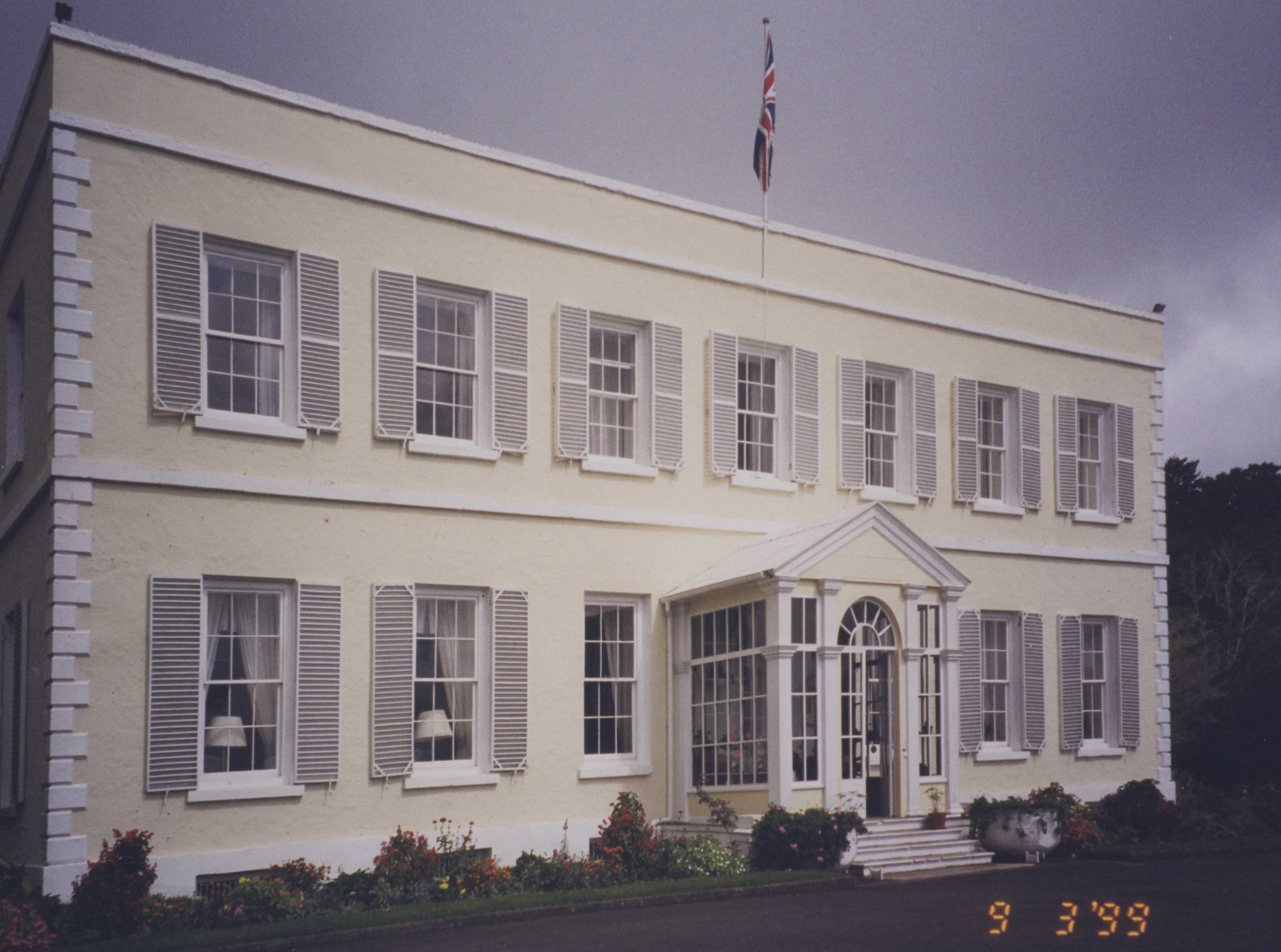
St Helena, Jamestown, Plantation House, 1999.
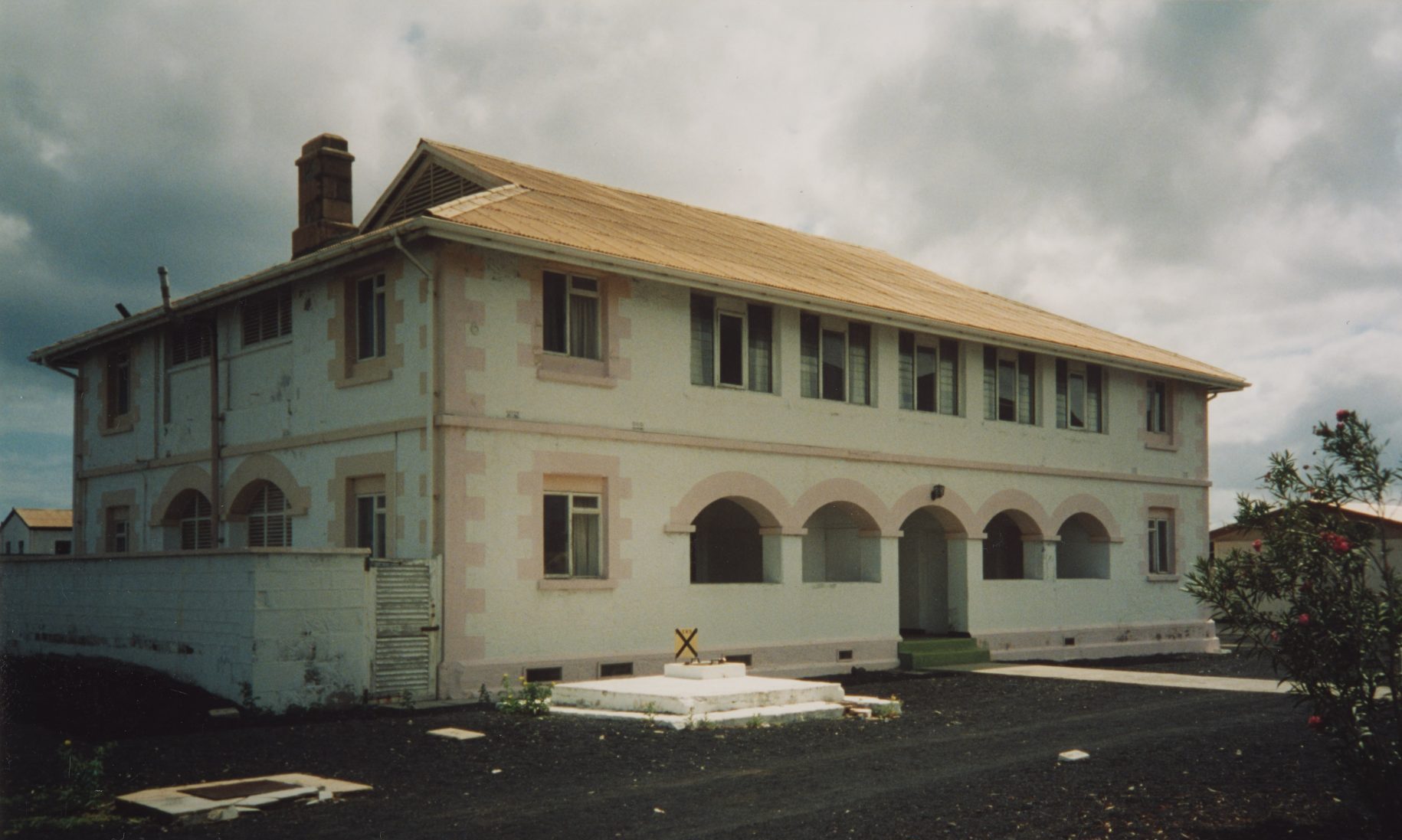
Ascension Island: new Government offices in Georgetown, 2002.
Montserrat: Plymouth
Montserrat became a British colony in 1632. It is a mountainous volcanic island in the Leeward group in the Caribbean sea. Volcanic activiity since 1995 has left over half the island devastated by lava flows and ash. Pymouth, which was the capital, was abandoned in 1997. The charming former Government House stll stands but has perforce been left to deteriorate. The seat of government moved to Brades in the north, and a new Government House, including a residence, was built in the residential area of Woodlands.
…
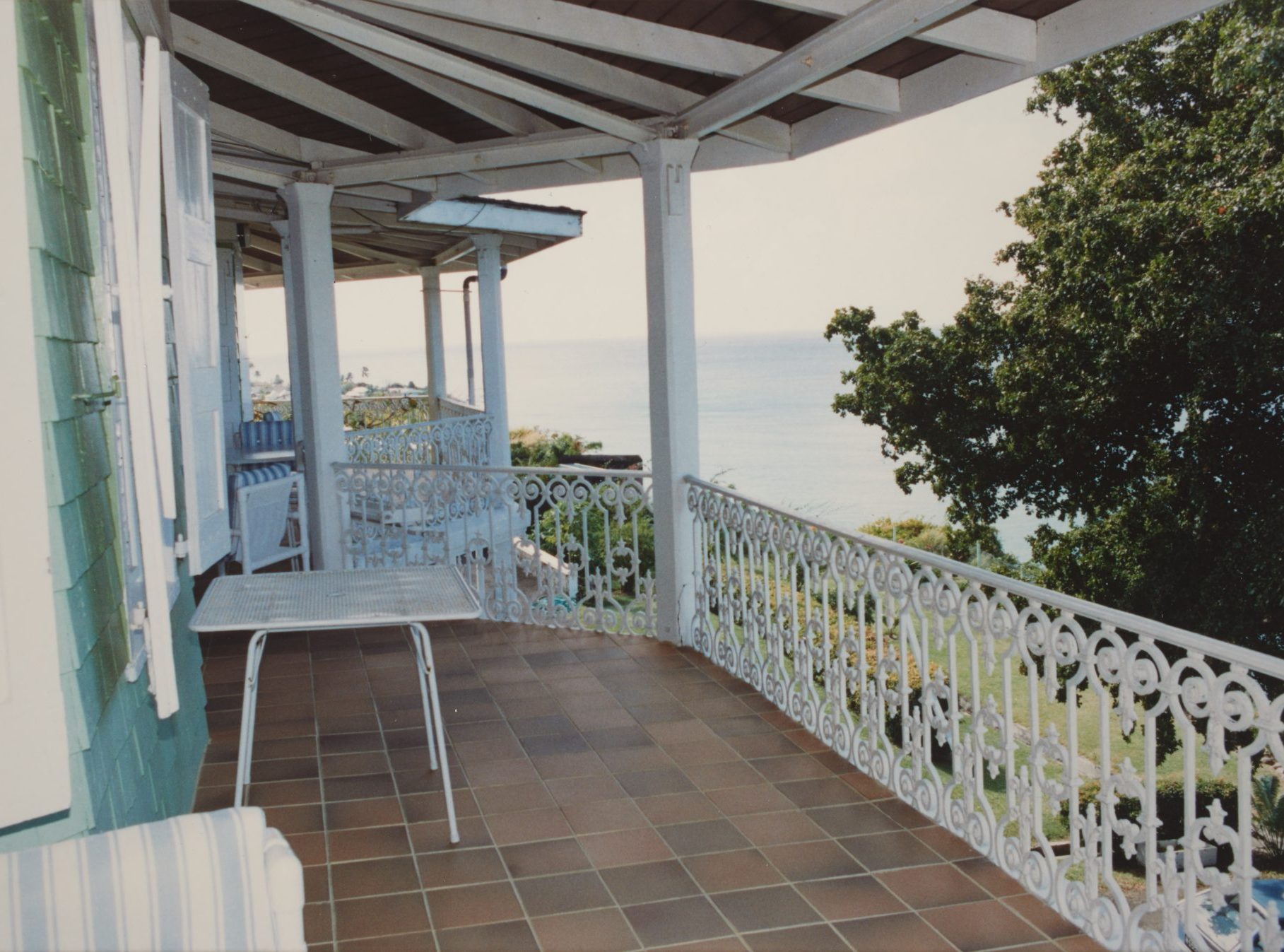
Montserrat, residence balcony, 1990s.
…
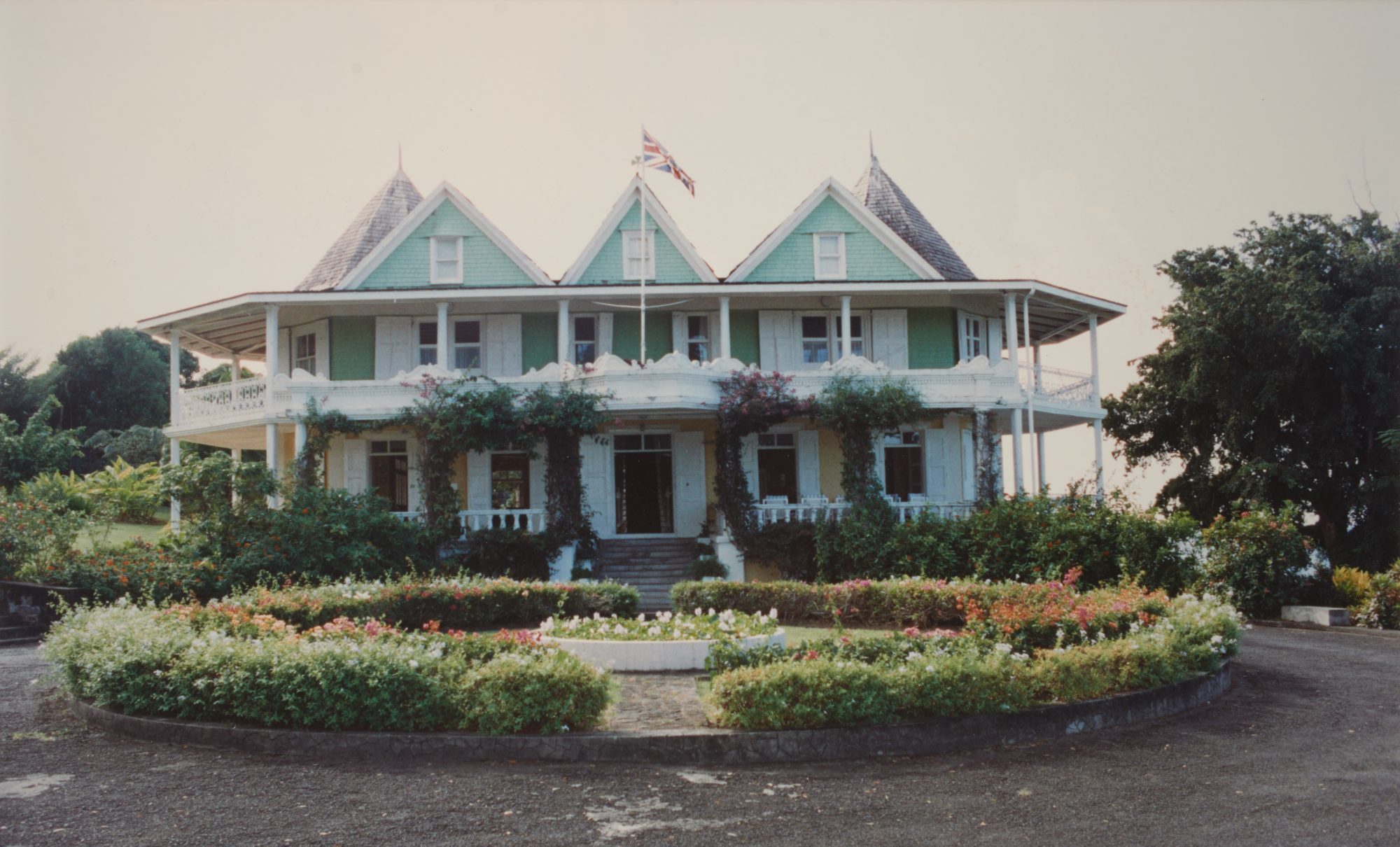
Montserrat, Governor’s residence, 1990s.
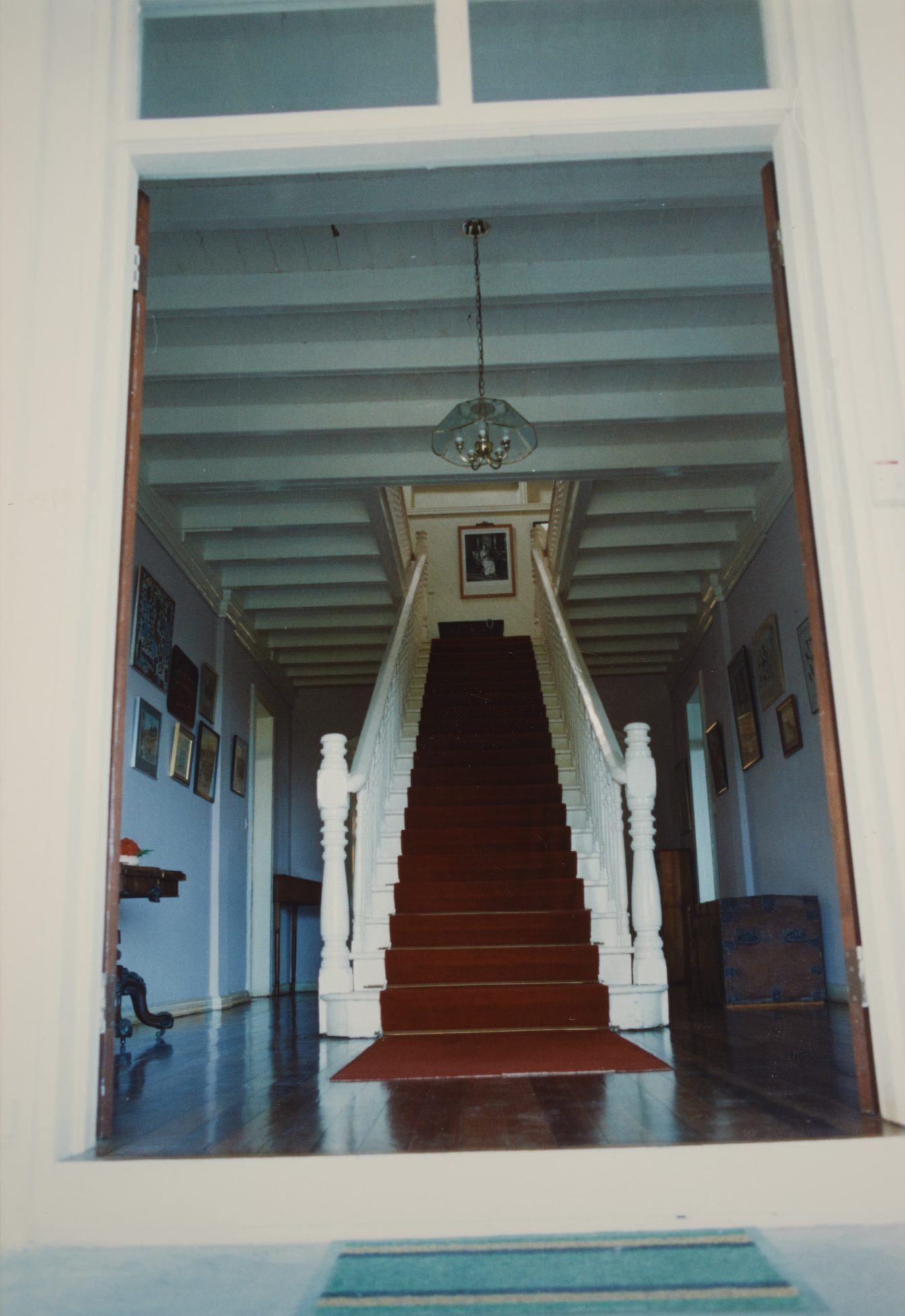
Montserrat residence, hall and stair, 1990s.
Anguilla: The Valley
Anguilla became a British colony in 1650. It is a flat coralline island, one of the most northerly of the Leeward Islands in the Caribbean Sea. The Governor lives at Government House in the ‘Old Ta’ area of The Valley and works works at HM Governor’s Office, on Government House Drive.
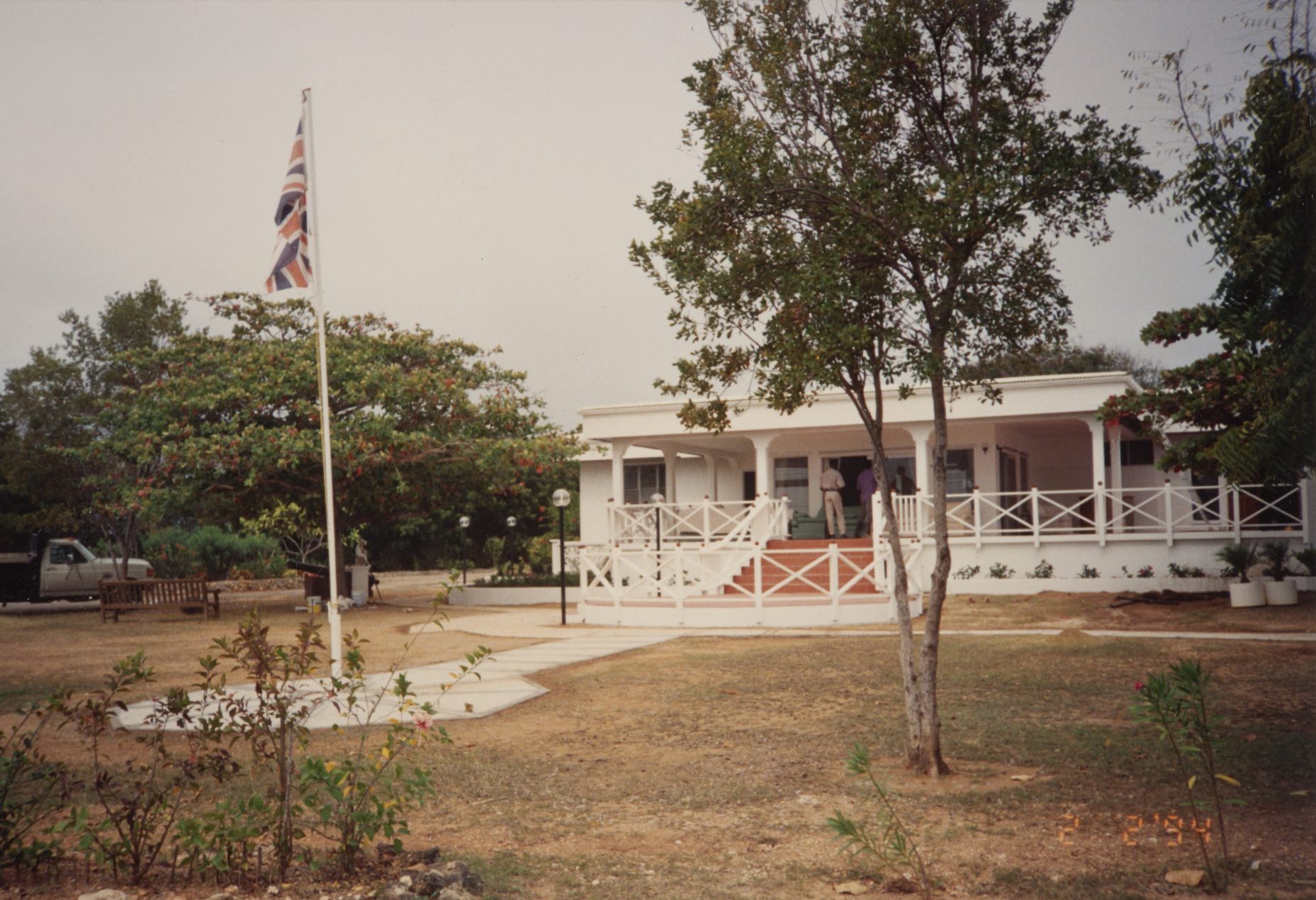
Anguilla, Governor’s residence, 1990s.
…
Cayman Islands: George Town
The Territory comprises three low-lying islands in the west Caribbean. They were ceded to Britain by Spain under the 1670 Treaty of Madrid. The Governor lives at Government House, built in 1964, on Seven Mile Beach in Grand Cayman, and works at the Governor’s Office nearby.
British Virgin Islands: Road Town
Captured from the Dutch in 1672, the Territory comprises the eastern part of the Virgin Islands archipelago in the Caribbean Sea, and includes 16 inhabited islands, of which Tortola is the largest and includes the capital, Road Town. The Old Government House, built in 1899, was destroyed by a hurricane in 1924, but immdiately rebuilt and used until vacated in 1999, when the building was transformed into a museum. A new Government House was completed on adjacent land in 2003, which is where the Governor lives and works today. It was built by Meridian Construction and designed by OBM and FCO Estates.
…
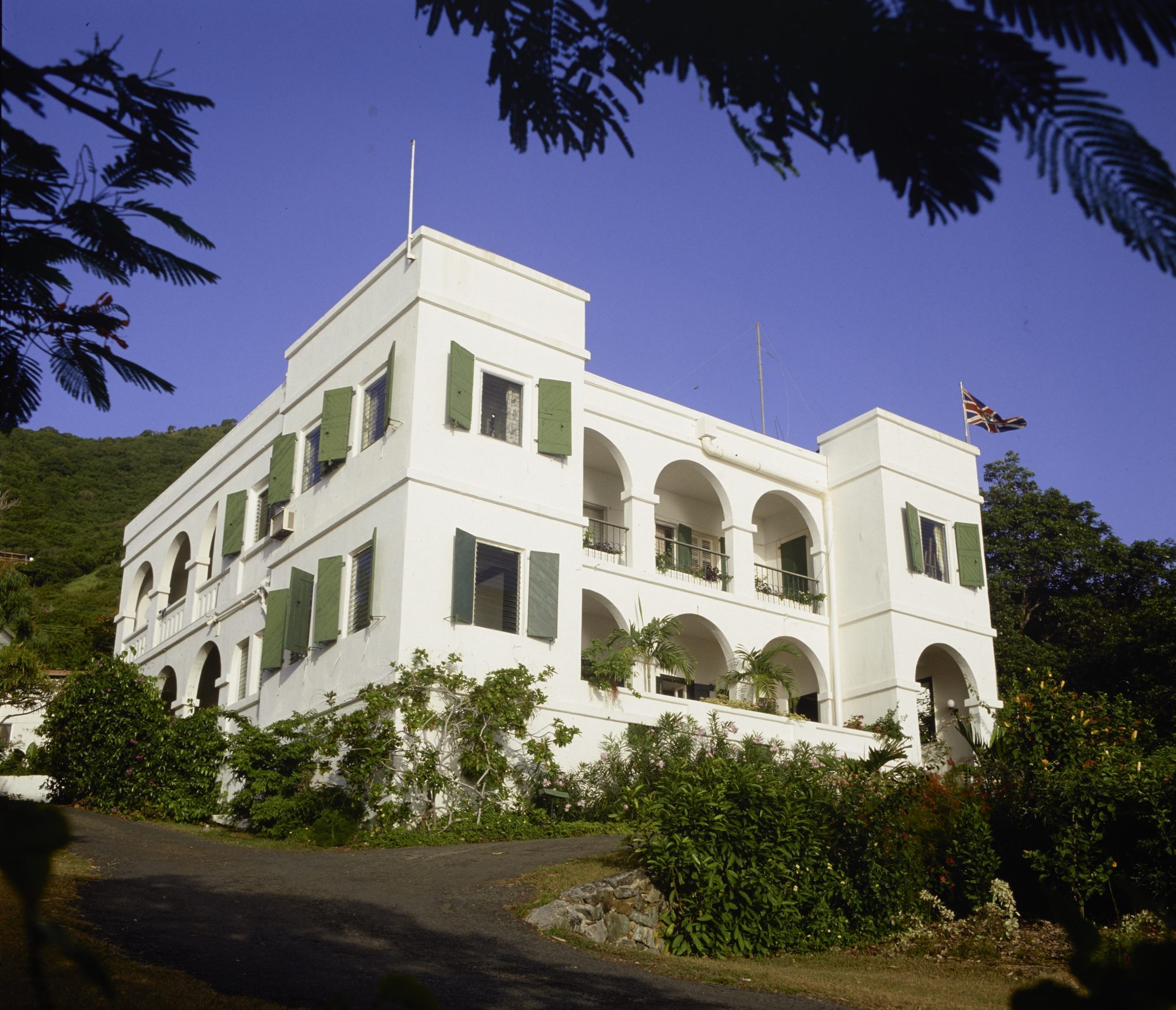
British Virgin Islands: Tortola, former Government House, 1993.
Gibraltar: Gibraltar
Gibraltar was ceded to Britain under the 1713 Treaty of Utrecht. Since 1728, the Governor has lived in The Convent, on Main Street, in a building that was originally a Franciscan friary built in 1531.
…
Falkland Islands: Stanley
The British first claimed sovereignty in 1765 and founded a British settlement the following year, and the islands were permanently colonised in 1833. The Governor has lived and worked at Government House, on Ross Road in the capital Stanley, since it was built in 1845.
…
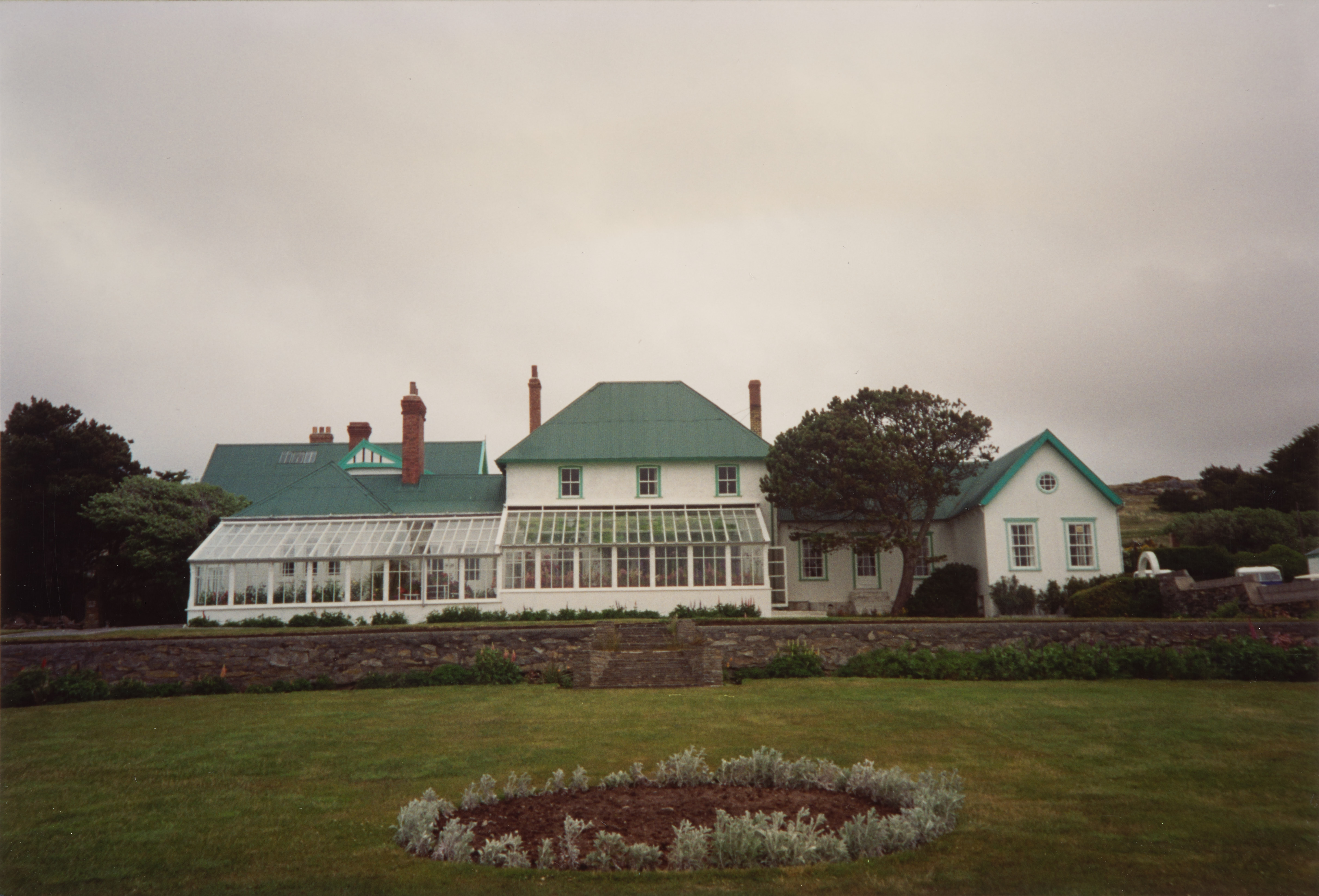
Government House, view from front garden, 1996.
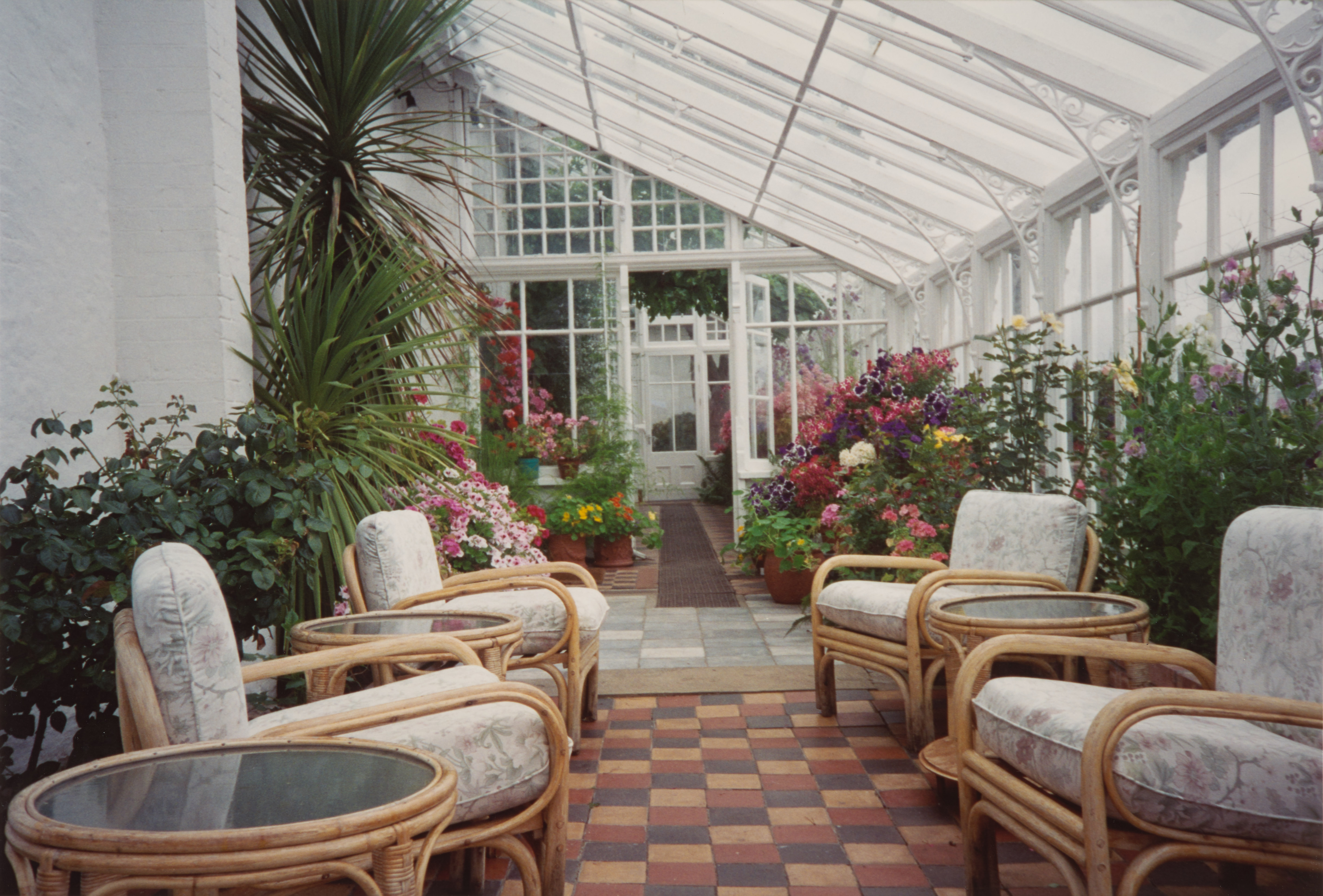
Stanley, conservatory at Government House, 1996.
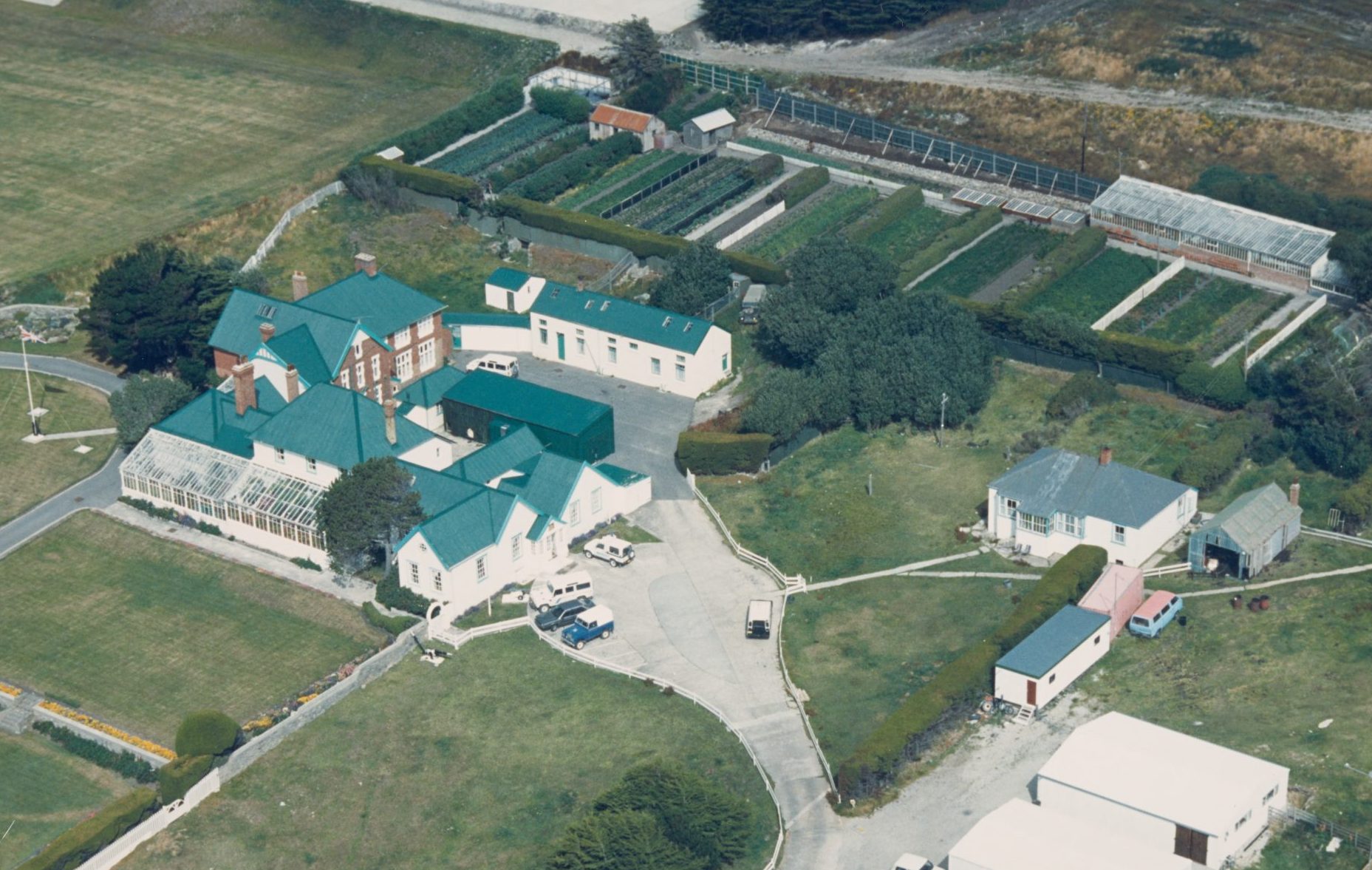
Falkland Islands, aerial view of Government House, Stanley, 1996.
Turks and Caicos Islands: Cockburn Town
About 40 islands, of which eight are permanently inhabited. The Turks and Caicos Islands first became a British colony in 1799 when they were annexed as part of the Bahamas.They achieved separate colonial status in 1848. The Governor has resided since 1973 at an historic property called “Waterloo” in Cockburn Town on the island of Grand Turk. It was built in 1815 (hence the name) and has survived numerous hurricanes and extensive restorations.
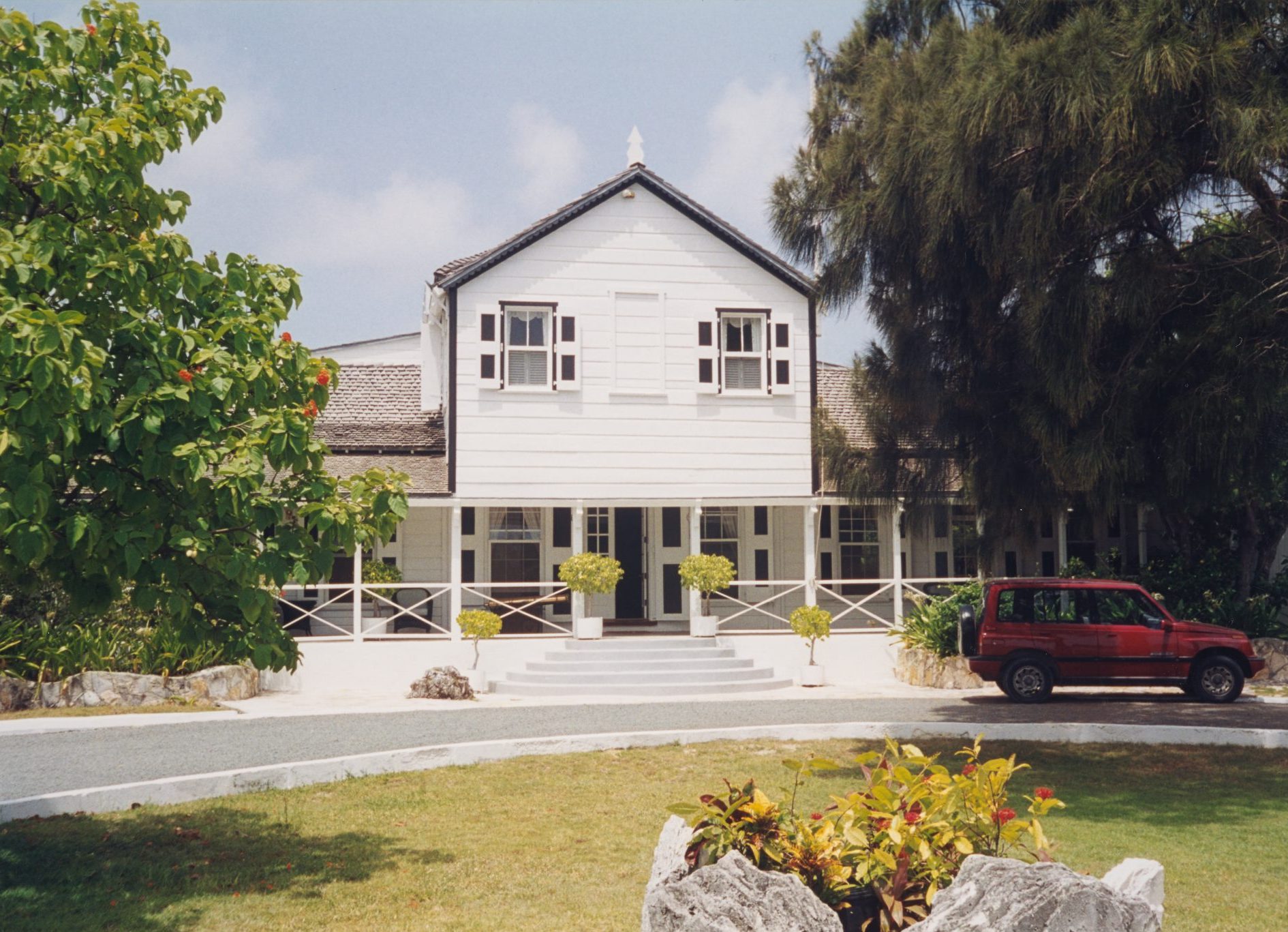
Grand Turk, Governor’s residence, 2000.
…
South Georgia and the South Sandwich Islands: King Edward Point
South Georgia was discovered by Captain Cook in 1775. This Territory, which has no permanent human population, was separated from the Falkland Islands Dependencies in 1985. The Governor of the Falkland Islands is also the Commissioner of this Territory.
…
Pitcairn, Henderson, Ducie and Oeno Islands: King Edward Point
Pitcairn, in the South Pacific Ocean, was settled by the HMS Bounty mutineers in 1790, and was formally became a British settlement in 1887. The other three islands in the Territory are well over 100 miles distant, in different directions. The Governorship of the Territory is held by the British High Commissioner to New Zealand, resident in Wellington: day-to-day administration on Pitcairn is handled locally by the Mayor.
…
Sovereign Base Areas of Akrotiri and Dhekelia (Cyprus).
These two bases were retained under British sovereignty when Cyprus gained independence in 1960. The Episkopi Cantonment is the administrative and military headquarters.
…
British Antarctic Territory.
Established in 1962 as a distinct territory from the Falkland Islands Dependencies. Rothera Research Station, on Adelaide Island, is the UK’s largest Antarctic base, and also serves as the capital of the Territory, which is administered by the Polar Regions Department of the Foreign, Commonwealth & Development Office (FCDO).
…
British Indian Ocean Territory.
Until 1965 this Territory, comprising the Chagos Archipelago of 55 islands in the Indian Ocean, was part of Mauritius/Seychelles. The territory no longer has a local civilian population and all its inhabitants are military personnel and contractors associated with the huge US military base on Diego Garcia, the Territory’s largest and most southerly island. The territory is administered by a Commissioner, working out of the Foreign, Commonwealth & Development Office in London, who is represented by a stationed Royal Navy Commander in the Naval Support Facility at Diego Garcia.
…

